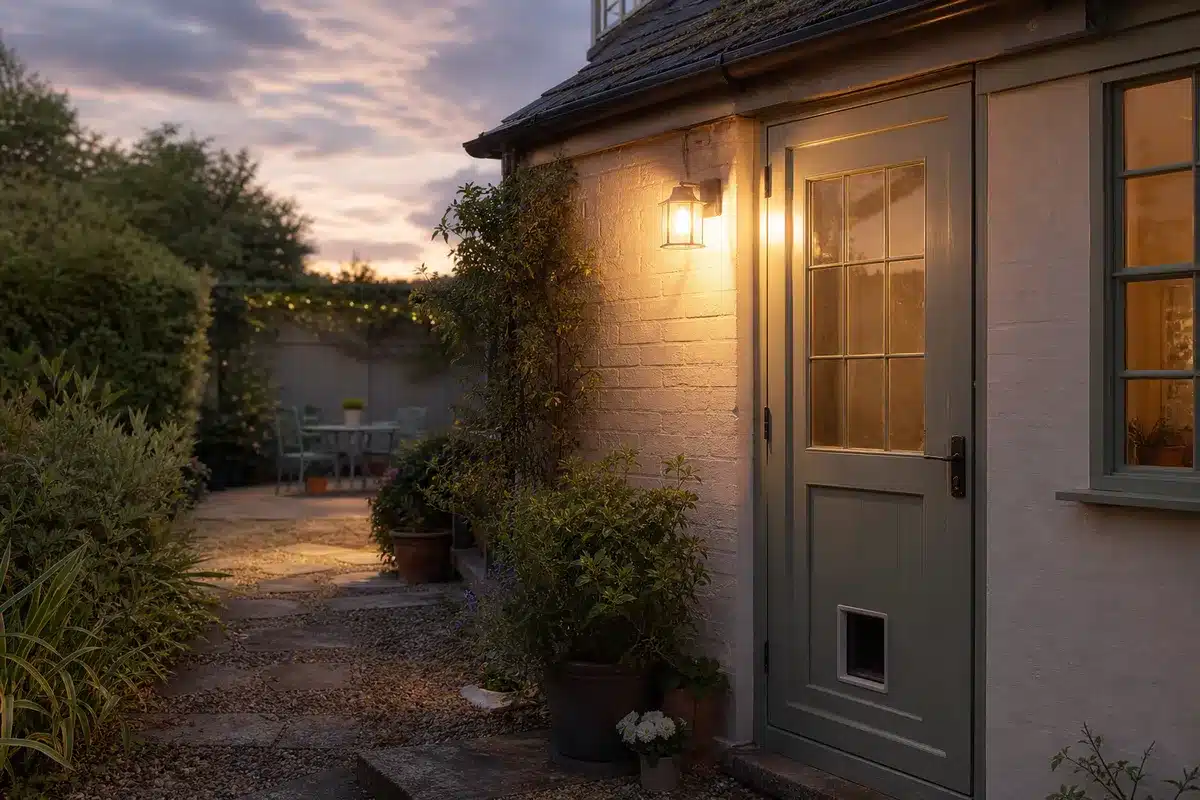
A motion sensor security light is one of the simplest, kindest upgrades you can make to your home. It lights your path when you arrive home in the dark, helps you find your keys, and gently tells anyone lingering outside that they’ve been noticed.
We’ve chosen five motion sensor security light options for UK homes, from solar garden lights with no wiring at all to a floodlight with a built-in camera. We’ve also included simple tips on placement, so your light helps you without bothering the neighbours.
The short answer
- Brightest A mains floodlight like the CLY 30W, fitted by an electrician.
- No wiring Solar lights such as JumJam or Lepro for gardens and gates.
- No sun, no power Auraglow’s battery light suits sheds and side passages.
- Light plus camera Ring Floodlight Camera records as well as lighting up.
In this guide
How a motion sensor security light works
Most lights use a passive infrared (PIR) sensor, which detects the warmth of a person or car moving across its view. When it senses movement, the light switches on for a set time, usually adjustable from a few seconds to several minutes. A built-in daylight sensor stops it switching on during the day.
Our 5 motion sensor security light picks

Bright, simple and weatherproof
A straightforward mains-powered motion sensor security light with a 30W LED and a quoted 2,820 lumens. It’s rated IP66 for British weather. Mains lights should be fitted by a qualified electrician if you’re not confident.
- Very bright for the price
- IP66 weather rating
- Simple PIR sensor
- Needs mains wiring
- Cool white light

Three adjustable heads
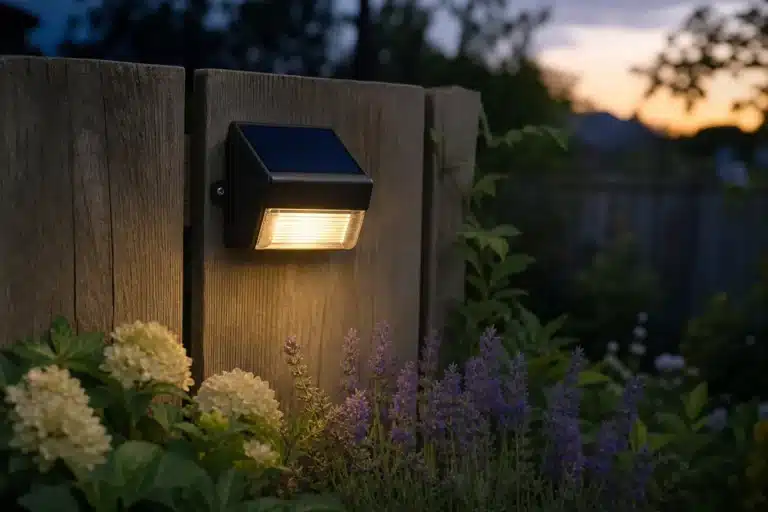
A popular solar option with three adjustable heads, so you can light a path, a gate and a corner of the garden at once. No wiring at all: just a sunny spot.
- No wiring needed
- Adjustable heads
- Several lighting modes
- Dimmer after grey winter days
- Needs direct sunlight

Battery powered, fit anywhere
This little battery-powered light is perfect for sheds, side passages and porches where there’s no power and not much sun. It switches on when it senses movement.
- Fits anywhere
- No wiring or solar panel
- Inexpensive
- Not as bright as mains lights
- Batteries need replacing

A floodlight with a 2K camera
If you’d like your security light to record too, Ring’s wired floodlight camera combines bright floodlights with 2K video and 6x zoom. Recording history generally needs a Ring Home plan.
- Light and camera in one
- Ring app alerts
- Deters visitors
- Needs mains wiring
- Recordings usually need a plan
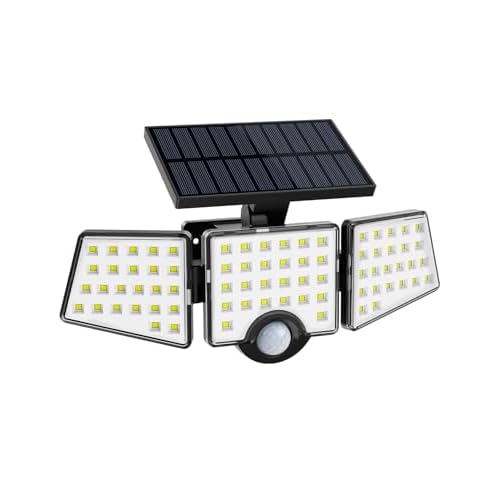
1200 lumens with three heads
An affordable solar motion sensor security light with three adjustable heads and an IP65 rating. A good, simple choice for a back gate or bin store.
- Affordable
- Adjustable heads
- Easy to fit
- Less bright than mains lights
- Panel must face the sun
Solar, battery or mains?
| Type | Brightness | Fitting | Best for |
|---|---|---|---|
| Mains | Brightest | Electrician recommended | Driveways, front of house |
| Solar | Good in summer, lower in winter | Easy DIY | Gardens, gates, fences |
| Battery | Modest | Very easy | Sheds, porches, passages |
| Floodlight camera | Bright | Electrician recommended | Watching and lighting the drive |
Solar lights are lovely in summer but can struggle after a run of grey winter days, so place the panel where it gets the most direct light. Mains lights are the most dependable all year round. In the UK, adding a new outdoor light circuit can be notifiable building work, so it’s worth using a registered electrician.
Where to put your motion sensor security light
Gentle placement tips
-
Light the routes you use
Front path, back door, bins and the side gate.
-
Mount at around 2 to 2.5 metres
High enough to be out of reach, low enough to sense movement well.
-
Angle it downwards
Light the ground, not the sky or next door’s windows.
-
Set a short timer
One or two minutes is usually plenty.
-
Reduce sensitivity near roads
Stops passing cars and cats triggering it all night.
Being a considerate neighbour
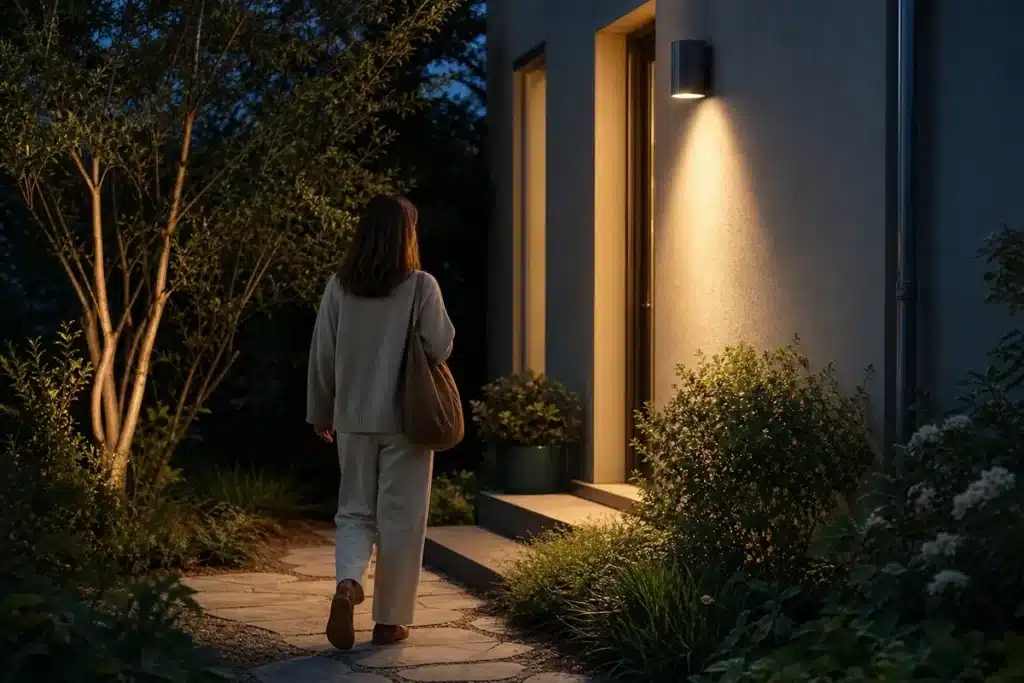
A motion sensor security light that shines into a neighbour’s bedroom can cause real upset. Point lights downward, choose a warmer colour if you can, and avoid lights that trigger from the pavement. Light pollution can also be a statutory nuisance, which your council can investigate, so a little care goes a long way. The government’s light pollution guidance explains more.
Pairing lights with cameras
Lights and cameras work beautifully together: the light deters, and the camera records with clearer colour footage when the light is on. If you’re thinking about a camera too, see our guides to the best home security cameras and the best solar security lights.
Warm white or cool white?
Many security lights are cool white, which looks bright and clinical. Warm white feels softer and more welcoming, and it’s often kinder to neighbours and wildlife. If you’re lighting a path you walk every evening, warm white makes coming home feel gentler. For a driveway where you want the clearest camera footage, cooler light can help.
Lights and wildlife
Bright lights left on for long periods can disturb bats, moths and nesting birds. Choosing a motion sensor rather than a light that stays on all night, angling it down and keeping the timer short all help. It’s a small, caring change that still keeps your home safe.
How long should the light stay on?
One to two minutes is usually enough to walk from the car to the door or put the bins out. Longer timers drain solar and battery lights and are more likely to annoy neighbours. Most lights let you adjust the timer with a small dial on the sensor, so take a moment to set it when you fit the light.
When to call an electrician
If you’re adding a new outside light rather than replacing an existing one, or you’re unsure about isolating the circuit, please use a registered electrician. They’ll make sure connections are weatherproof and safe, and that any notifiable work is certified. It’s a quick job for a professional, and it means your new motion sensor security light will work reliably for years.
Motion sensor security light: FAQs
How bright should a security light be?
For a path or back door, a few hundred to 1,000 lumens is plenty. Driveways and larger gardens may suit 1,500 lumens or more.
Do solar security lights work in winter?
They do, but they’re dimmer and run for shorter times after cloudy days. Place the panel in the sunniest spot you can.
Can I fit a mains security light myself?
If you’re not confident with electrics, use a qualified electrician. Some outdoor electrical work is notifiable under Building Regulations.
Why does my security light keep coming on?
Animals, passing cars or moving branches. Lower the sensitivity, angle the sensor down or shorten the timer.
The bottom line
- Light the paths you actually use
- Angle lights down and keep timers short
- Use an electrician for mains lights
A security light is a small, kind upgrade that makes coming home safer. Choose mains for brightness, solar for easy fitting, or a battery light where there’s no power and little sun.
General information only. Features, prices and availability change, so always check the product listing and your manufacturer’s instructions. If a job involves your car’s electrics or mains wiring and you’re not confident, please ask a qualified installer.