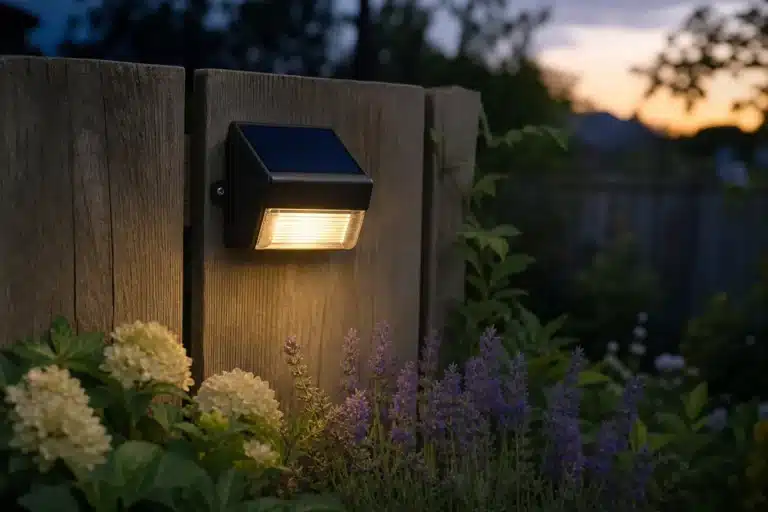
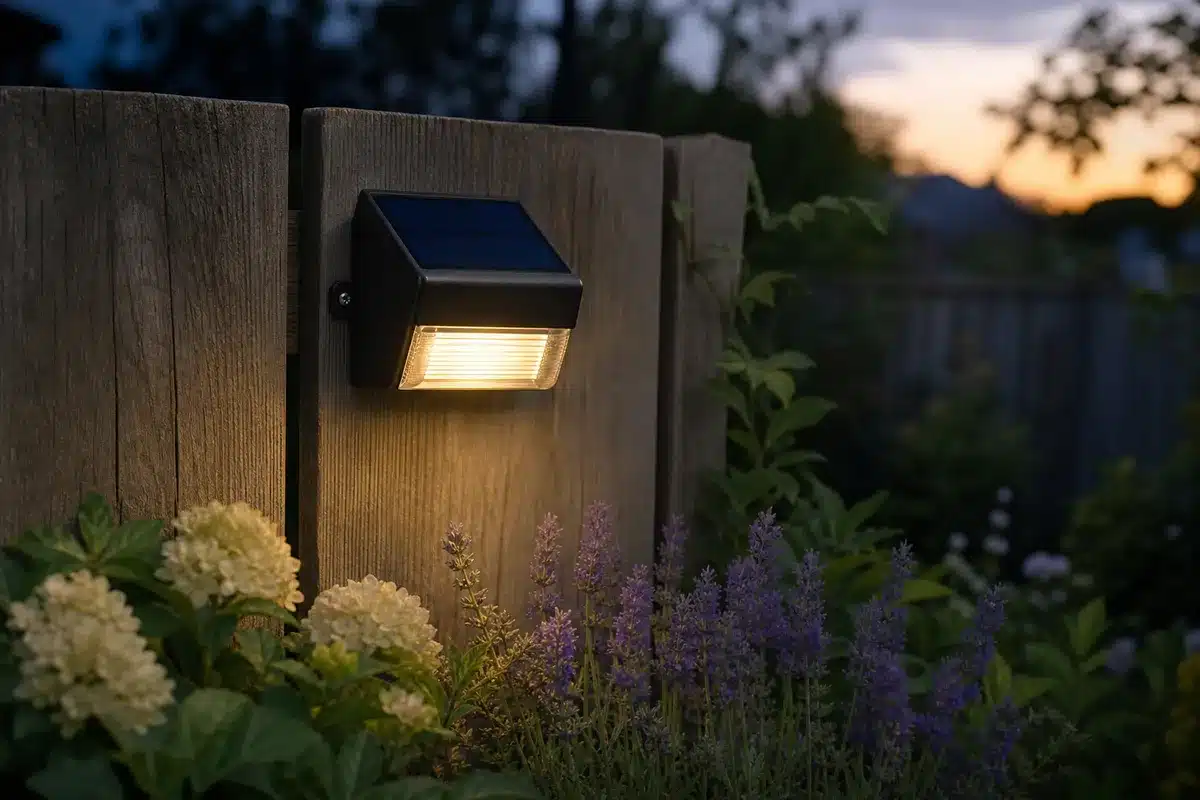
A solar security light is the easiest way to add light to a garden, side gate or shed. There’s no wiring and no electrician: just fix it to a sunny wall or fence, and it charges during the day and switches on when it senses movement at night.
We’ve chosen five solar light options available on Amazon.co.uk, and added honest advice on brightness and how they cope with British winters.
The short answer
- Best overall JumJam with three adjustable heads.
- Best value Lepro Solar Security Light, IP65.
- Brightest 348LED 2000-lumen light for larger spaces.
- Winter reality Expect dimmer, shorter lighting after grey days.
In this guide
How a solar security light works
A small solar panel charges a built-in battery during daylight. At night, a light sensor switches the motion sensor on, and the light comes on when it detects movement. Many have modes: full brightness on motion, a dim glow that brightens on motion, or a constant low light.
Our 5 solar security light picks

Three adjustable heads
A popular solar security light with three adjustable heads, several modes and a motion sensor, great for lighting a path and gate at once.
- Adjustable heads
- Several modes
- No wiring
- Dimmer after grey days
- Needs direct sun
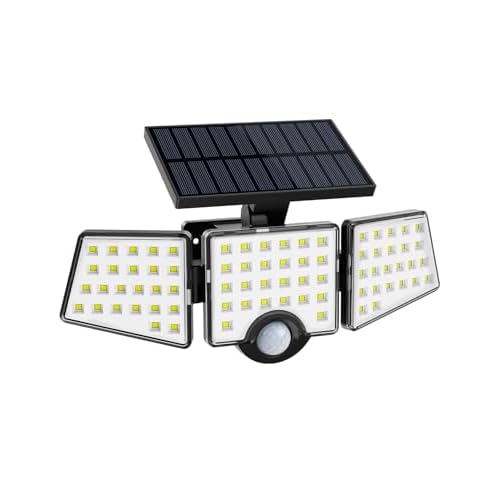
1200 lumens, IP65
An affordable solar security light with a quoted 1,200 lumens, three heads and IP65 weatherproofing.
- Affordable
- Bright for solar
- Weatherproof
- Panel attached to light
- Winter output lower

Wide 270° coverage
A bright solar light with a quoted 2,000 lumens and a wide 270° spread, useful for larger gardens and driveways.
- Very bright for solar
- Wide angle
- Three modes
- Large unit
- Brightness drops in winter

360° wide lighting
A compact wall-mounted solar security light with a wide lighting angle, ideal by a back door or shed.
- Compact
- Easy to fit
- Wide angle
- Less bright than floodlights
- Needs sunny wall

Three motion modes
A low-cost solar motion light with three sensor modes and a wide angle, handy for side passages and fences.
- Very affordable
- Three modes
- Wide angle
- Basic build
- Shorter runtime in winter
Lumens explained simply
| Where | Suggested brightness |
|---|---|
| Path or back door | 300 to 800 lumens |
| Side gate or shed | 500 to 1,000 lumens |
| Driveway or large garden | 1,500 lumens or more |
Solar lumen claims can be optimistic, so treat them as a guide. A slightly brighter light than you think you need is usually the calmer choice.
Getting the most from a solar security light
Simple tips
-
Find the sunniest spot
South-facing walls and fences work best.
-
Keep the panel clean
Wipe off dust, leaves and bird droppings.
-
Angle the light down
Light the ground, not next door’s windows.
-
Use motion mode in winter
It saves battery for when you need it.
-
Replace tired batteries
Some lights have replaceable batteries after a few years.
If you need light every night of the year at full brightness, a mains motion sensor security light is more dependable. Solar lights and cameras work well together: see our outdoor security camera guide. The government’s light pollution guidance explains why angling lights down matters.
Separate panel or built-in?
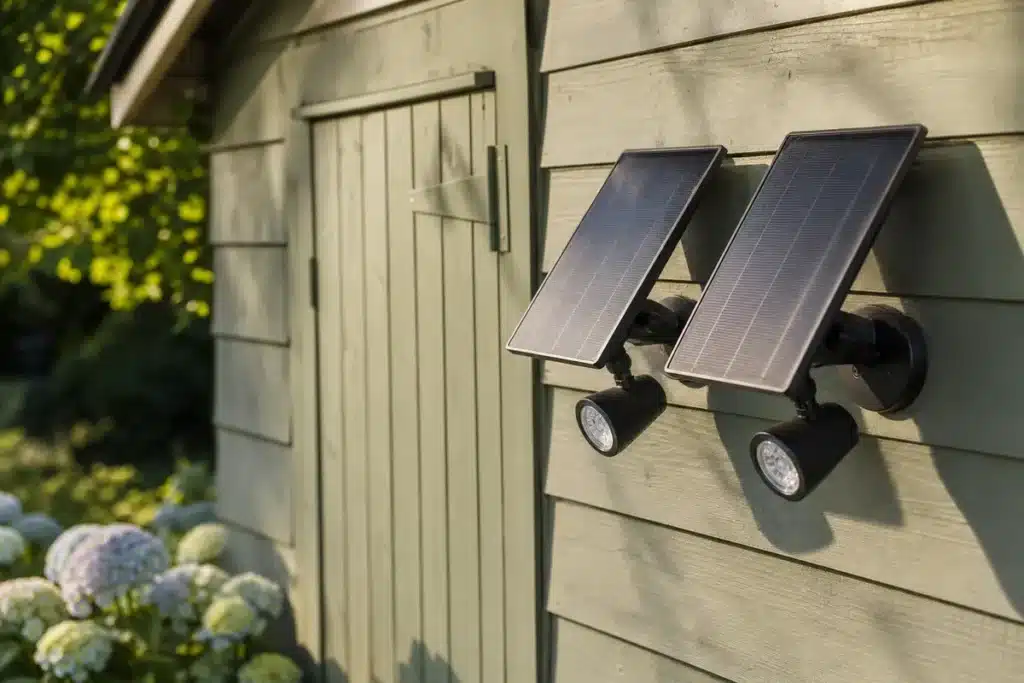
Some solar light models have the panel built into the light, which is neat and simple. Others have a separate panel on a cable, so you can put the light in shade and the panel in the sun. If the spot you want to light doesn’t get direct sunlight, a separate panel is the way to go.
Motion modes explained
Most solar lights offer a few modes. A pure motion mode stays dark until it senses movement, then lights up brightly, which saves the most battery. A dim-to-bright mode glows softly all night and brightens on motion, which is pretty along a path. A constant mode stays on, but uses the battery fastest, so it’s best avoided in winter.
Where solar lights shine
Solar lights are perfect for sheds, side gates, fences, bin stores and garden paths. For the front of the house or a busy drive, where you want reliable brightness every night of the year, a mains motion sensor light is more dependable.
Caring for your light
Wipe the panel every few months and check the light after winter storms.
Choosing the right solar security light for each spot
For a back door, a compact wall light with a built-in panel is usually enough. For a long garden path, a light with several adjustable heads lets you aim light exactly where you walk. For a shed or bin store in shade, choose a solar security light with a separate panel on a cable, so the panel can sit on a sunny fence while the light stays where it’s needed. Matching the light to the spot makes a big difference to how well it works.
Solar security light: FAQs
Do solar lights work in winter?
Yes, but they’re dimmer and run for shorter periods after cloudy days.
How long do solar security lights last?
The LEDs last for years; batteries may need replacing after a few years.
Can a solar security light go in shade?
Not really. Choose a model with a separate panel you can place in the sun.
Are solar lights bright enough?
For paths, gates and sheds, yes. For large driveways, a mains light may be better.
The bottom line
- No wiring needed
- Sunniest spot wins
- Mains lights for year-round brightness
A solar light is a simple, wire-free way to make your garden feel safer. Choose JumJam for flexibility, Lepro for value, and place it where the sun shines.
General information only. Features, prices and availability change, so always check the product listing and your manufacturer’s instructions. If a job involves your car’s electrics or mains wiring and you’re not confident, please ask a qualified installer.